Diabefree
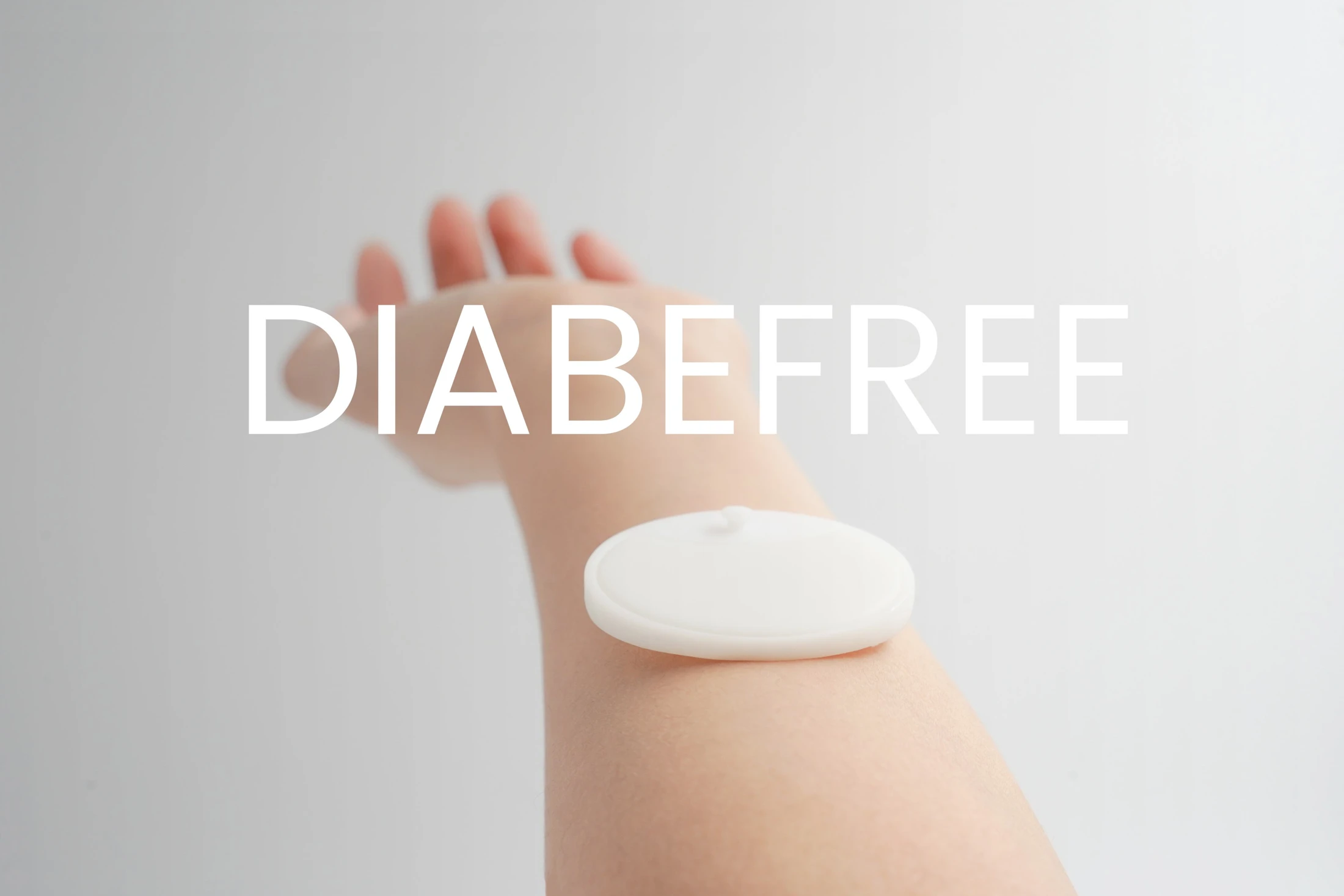
A wearable insulin-injection aid concept exploring comfort, self-expression and the emotional experience of everyday care.
- Context
- Xi’an Jiaotong-Liverpool University · Graduation project
- My contribution
- Independent project · Research, product concept & prototyping
Designing for the person behind the treatment.
Diabefree explores how young people experience wearing and using diabetes-related devices in everyday settings. The design question extends beyond the object itself to its visibility, appearance and the emotions associated with using it.
I developed the project through research, scenarios, material experiments and physical prototypes. The outcome combines a wearable concept with an app interface; it is presented as a design exploration, without clinical validation.
The project film
From an object to an everyday experience
The research focused on how people feel about a visible medical device, including its relationship to clothing, social situations and self-image. These questions informed the product’s soft form and more personal visual expression.
- 01
Frame
Identify questions around care, empathy and communication.
- 02
Explore
Combine secondary research, expert interviews, field visits and user narratives.
- 03
Synthesize
Review observations and feedback to frame design opportunities.
- 04
Envision
Develop scenarios and concepts for an everyday wearable.
- 05
Reflect
Use prototypes and peer feedback to examine the proposal.
Material, form and wearing
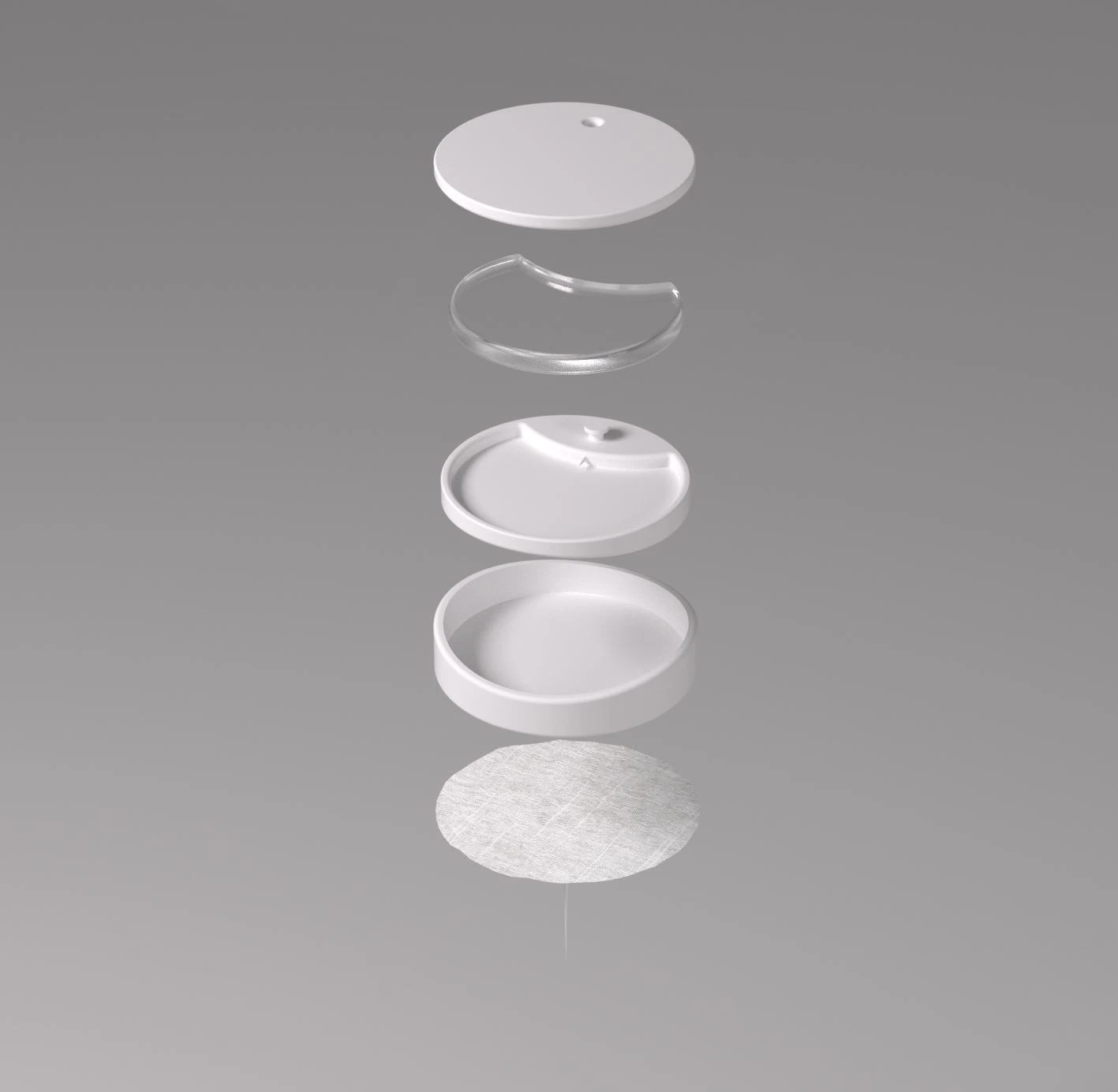
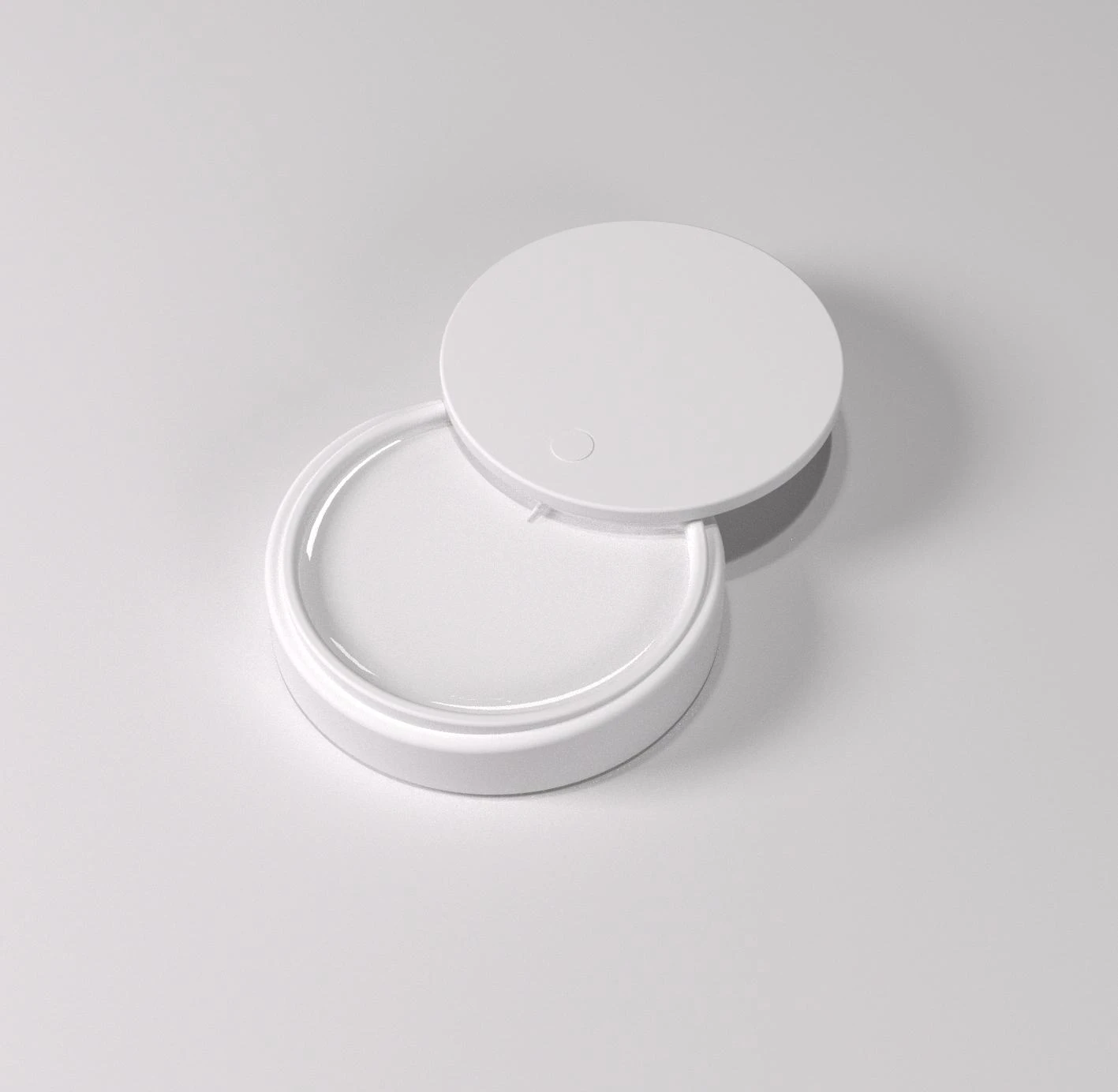
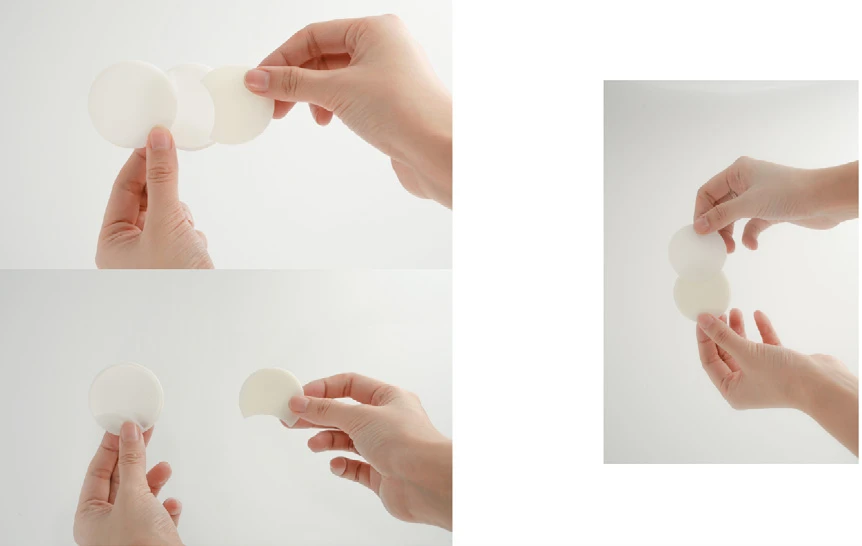
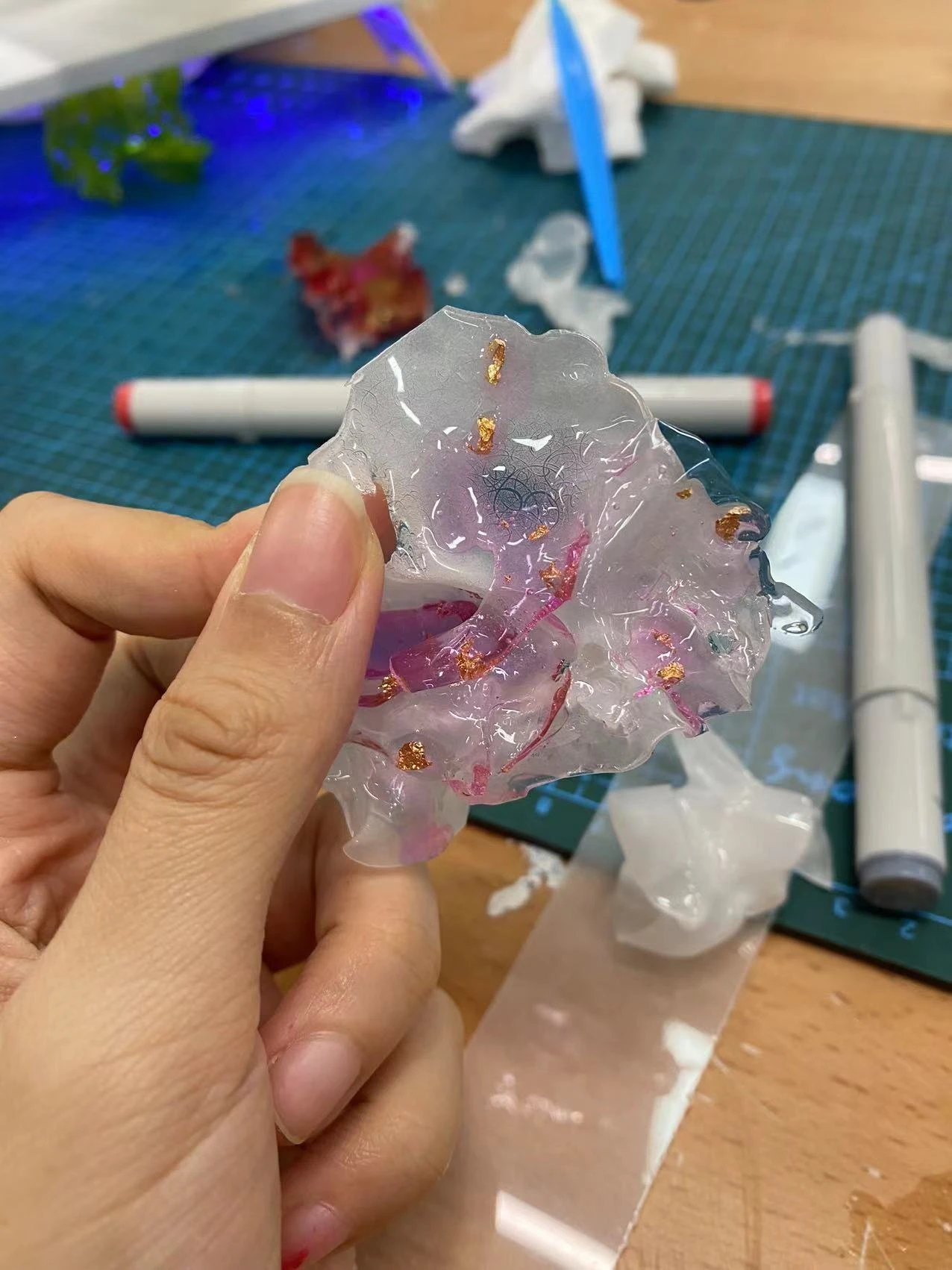
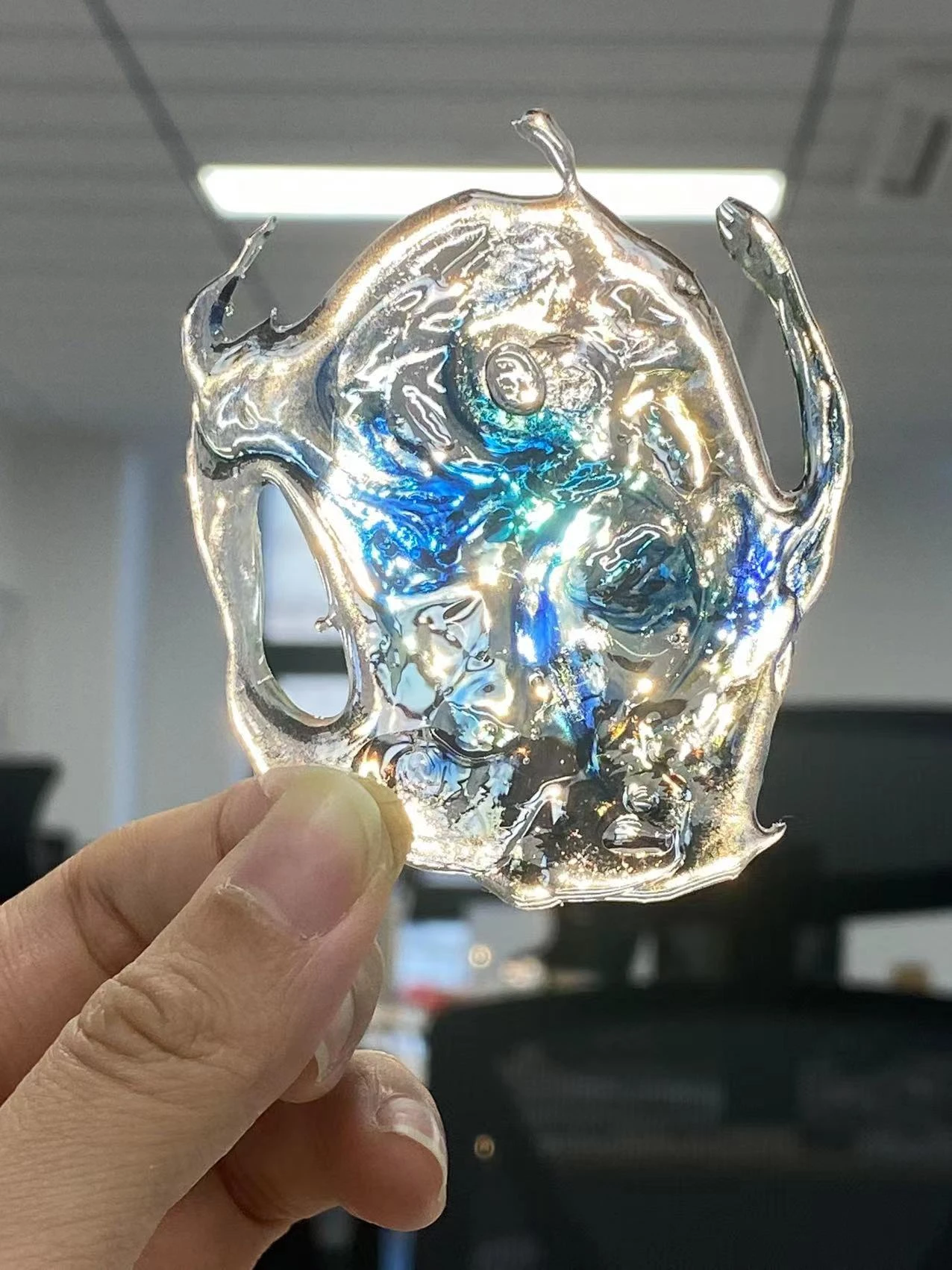
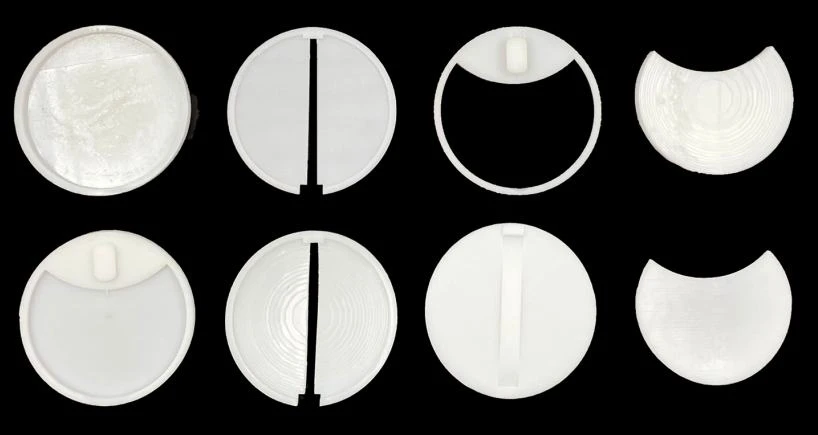
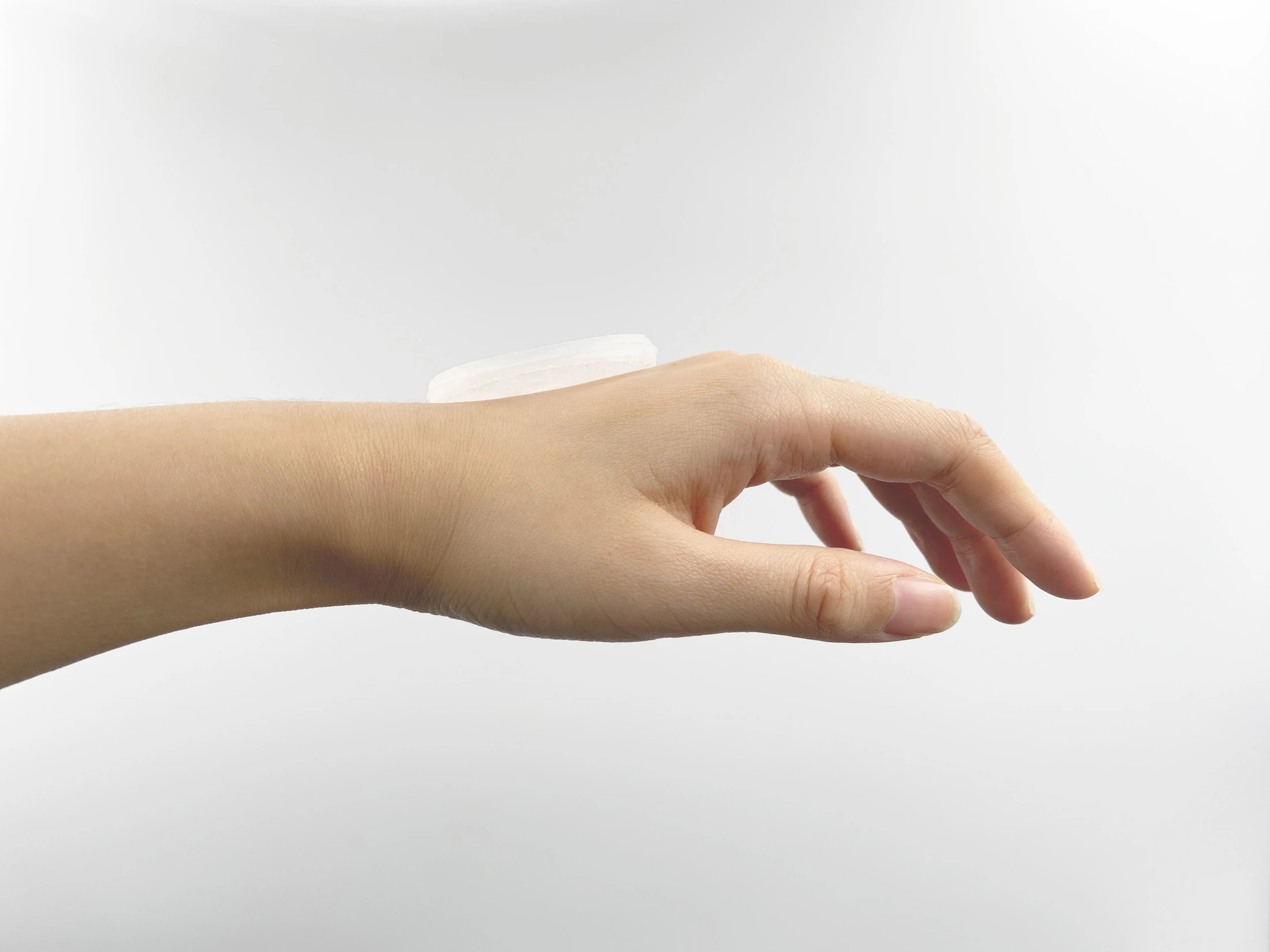
Experiments with resin, silicone, heat-shrink sheet and steel explored different visual and tactile qualities. Disc-shaped prototypes were then used to examine opening, layering and how the object sits on the body.
A wearable and its companion interface
The proposal pairs a compact, layered object with a flower-like visual element and a companion app concept. The app artwork explores the display of remaining quantity, injection modes and a calendar; these are proposed interface features.
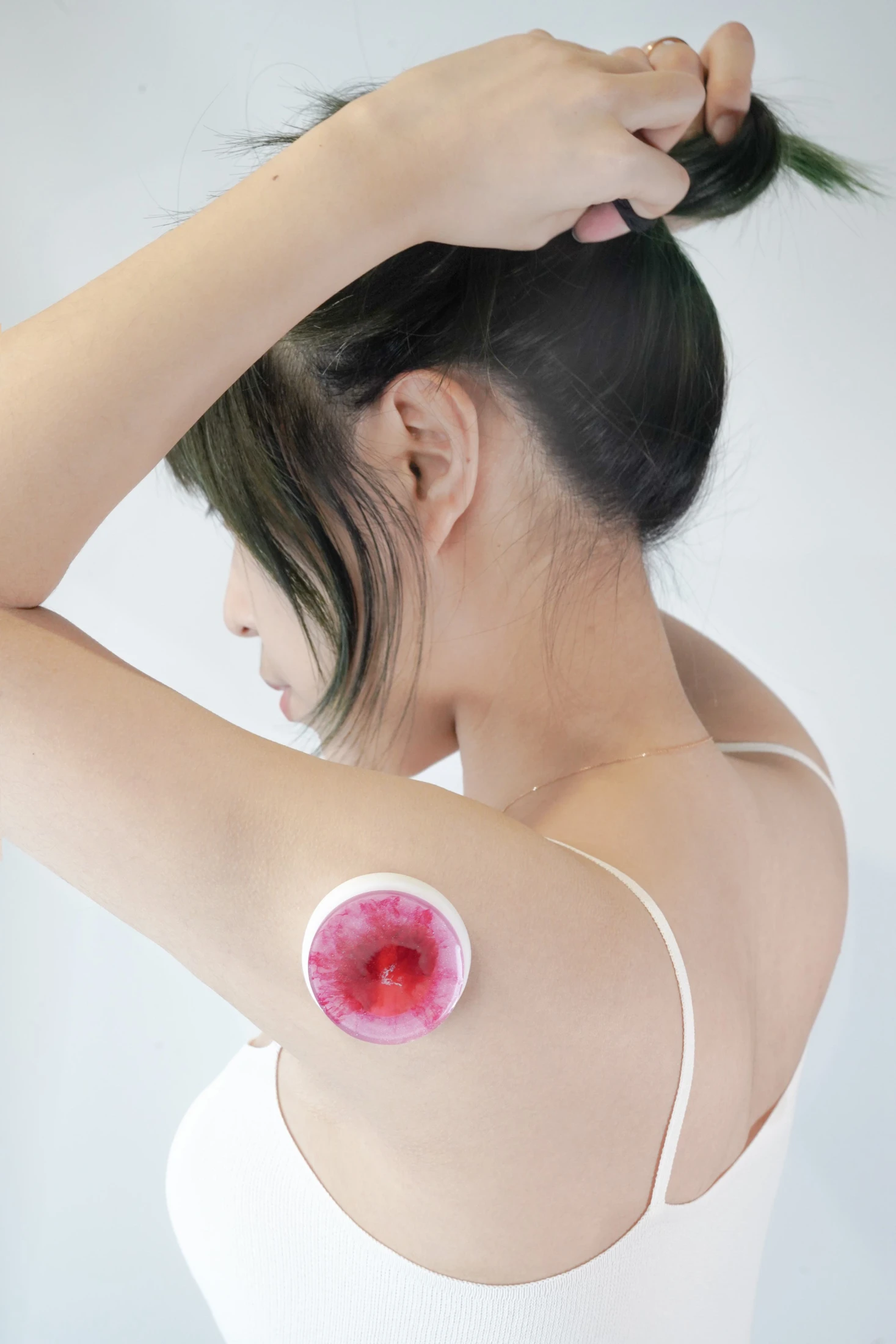
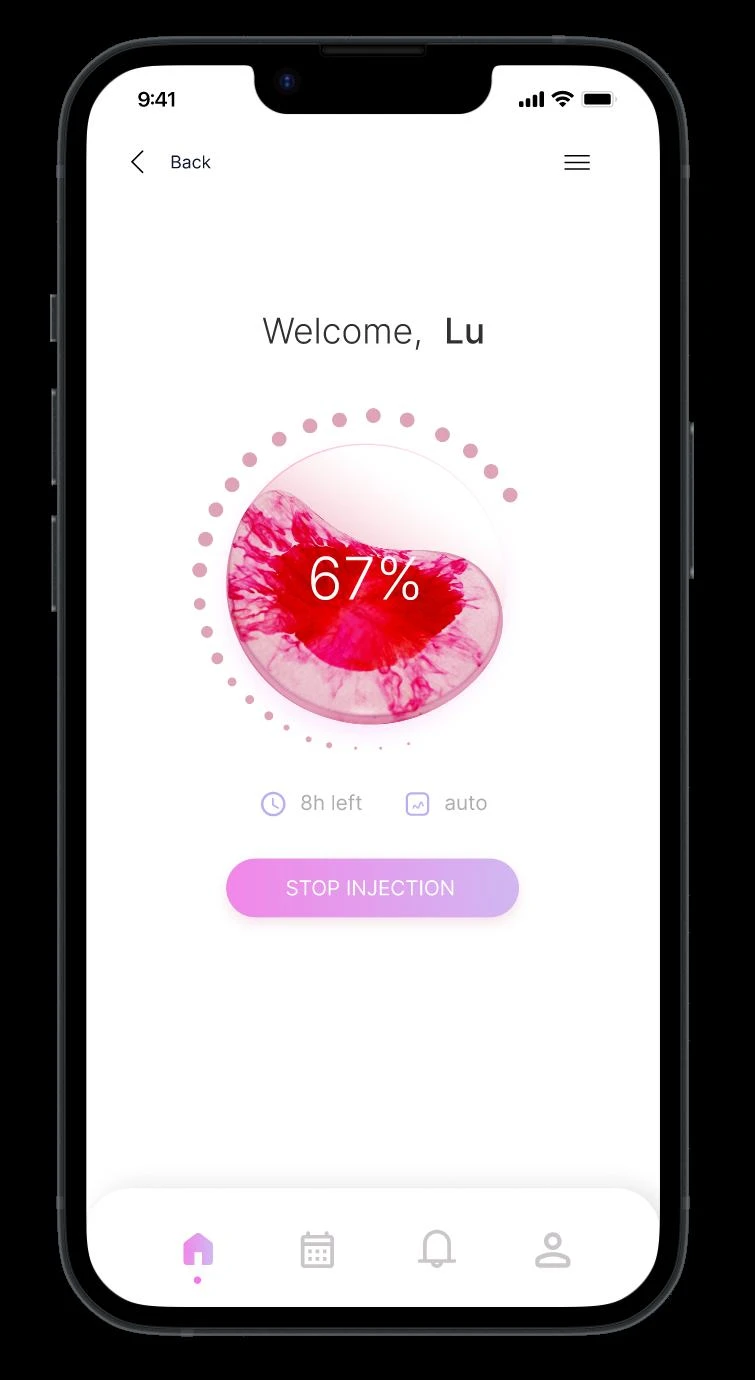
Making the concept tangible
Exploded views and hands-on models communicate the proposed layered construction and opening sequence. The project is recorded under KANG LU in the 2022–2023 XJTLU Industrial Design yearbook, printed pages 121–122.